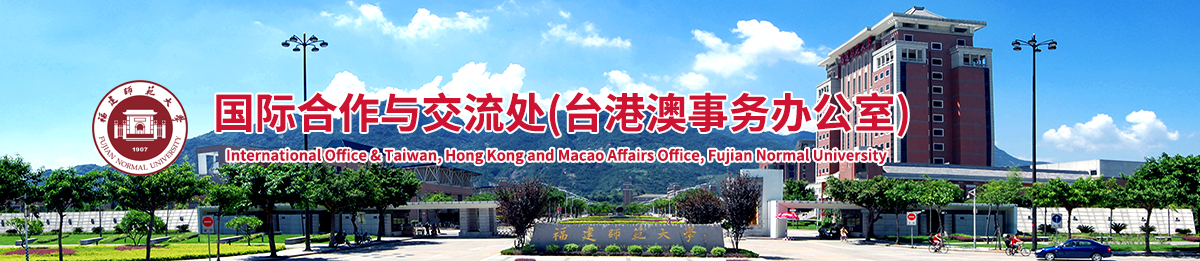
Fujian Normal University is located in Fuzhou, a historic and cultural city renowned as the "Coastal Zou-Lu" (a traditional epithet for a region flourishing with scholarship and culture). It is a century-old provincial institution of higher learning with a distinguished history and enduring reputation. The university traces its origins to the Fujian Superior Normal School founded in 1907 by Chen Baochen, tutor to the last emperor of the Qing Dynasty. After successive mergers and reorganizations involving Hwa Nan Women's College of Arts and Sciences, Fukien Christian University, Fujian Provincial Normal College, and other institutions, it was established as Fujian Normal College in 1953 and renamed Fujian Normal University in 1972, which remains its name today. In 2012, the People's Government of Fujian Province and the Ministry of Education entered into a co-sponsorship agreement to jointly build the university. It was designated a key high-level university in Fujian Province in 2014, a first-class university under Fujian Province's construction initiative in 2018, and a Category A university in the second round of Fujian's "Double First-Class" initiative in 2022.
For over a century, the university has passed its torch from generation to generation. Numerous masters and eminent scholars of national and international renown have taught here, including Ye Shengtao, Guo Shaoyu, Dong Zuobin, Lin Lanying, Zheng Zuoxin, Huang Weiyuan, Tang Zhongzhang, Tang Chongti, and Yao Jiannian. Through the inheritance and innovation of successive generations of faculty, students, and staff, the university has forged the motto "To know and to act, with sincerity and broad-mindedness" (Zhi Ming Xing Du, Li Cheng Zhi Guang), cultivated an institutional ethos of "emphasizing education, diligent study, seeking truth, and innovation," and propelled forward various undertakings, earning numerous high-level honorary titles such as "National Civilized Unit" and "National Civilized Campus." Nurturing talent like cultivating orchids and fostering wisdom, the university has produced nearly 600,000 graduates of various types and at all levels since its founding, making significant contributions to the socioeconomic development of Fujian and the nation.
The university's main campus comprises two sites: Qishan Campus and Cangshan Campus, covering a total area of over 267 hectares. It currently offers 86 undergraduate programs (with 71 enrolling full-time undergraduate students through the national admissions system in 2025), serving over 25,000 full-time undergraduates and over 11,000 graduate students of various categories. The university has 2,118 full-time faculty members, of whom 61.24% hold senior professional titles and 68.7% hold doctoral degrees. The faculty includes one Fellow of the Royal Society of Canada, one Member of the Academia Europaea, and one Academician of the International Eurasian Academy of Sciences. Additional distinguished faculty include 7 recipients under the National High-Level Talent Special Support Plan for Leading Talents and 6 for Top-Notch Young Talents; 4 Distinguished Professors, 2 Young Program scholars, 1 Chair Professor, and 1 Lecture Scholar under the Changjiang Scholars Award Program; 9 recipients of the National Science Fund for Distinguished Young Scholars and 13 (including overseas) of the Excellent Young Scientists Fund; 1 Convener and 3 members of the Disciplinary Appraisal Panel of the Academic Degrees Committee of the State Council; 1 member of the Strategic Advisory Committee for Discipline Development of the Academic Degrees Committee of the State Council; 6 National Young and Middle-aged Experts with Outstanding Contributions; 6 National Candidates for the Hundred-Thousand-Ten Thousand Talents Project; 2 National Renowned Teachers; 3 National-level Huang Danian-style Faculty Teams; 2 MOE Innovation Teams; and 3 National-level Teaching Teams.
The university thoroughly implements the fundamental mission of fostering virtue through education, prioritizes talent cultivation, continuously deepens educational and pedagogical reforms, and strives to enhance the quality of talent development. It has received 24 National Teaching Achievement Awards at the first and second prize levels. The university hosts one base under the Ministry of Education's Top-Notch Student Training Program in Basic Disciplines 2.0. It has been approved for one National Excellent Teacher Training Program for Secondary Schools, two New Liberal Arts Research and Reform Practice Projects, one New Engineering Research and Reform Practice Project, and 36 National First-Class Undergraduate Program Construction Sites. Among its 19 teacher education programs, all 17 programs targeted for second-level professional accreditation have passed the certification process, making FNU the first normal university nationwide to achieve full coverage of such accreditation. One program has passed the CEEAA engineering education professional accreditation. The university has received 3 National Textbook Construction Awards and offers 54 National First-Class Undergraduate Courses and 2 National Ideological-Political Demonstration Courses. It currently hosts two National Joint Demonstration Bases for the Cultivation of Professional Master's Degree Postgraduates in Education. It has received funding for five projects under the National Innovative Talent International Cooperation Training Program from the China Scholarship Council. A total of 49 teaching cases developed by its faculty have been included in the China Professional Degree Teaching Case Center. The university houses a National Key Marxist Institute, four National Talent Training Bases, the MOE Training and Research Base for University Student Advisors, a National Base for Digital Literacy and Skills Training for All, the MOE Training and Research Base for Ideological and Political Education Teachers, and the MOE Key National Training Base for Vocational Education Teachers. FNU students have repeatedly won gold, grand, and first prizes in national-level competitions such as the China International College Students' Innovation Competition and the "Challenge Cup" competitions, and three doctoral dissertations have been selected among the National Top 100 Excellent Doctoral Dissertations.
The university fully leverages the driving role of disciplines, focusing on building a disciplinary system comprising first-class humanities and social sciences, high-level natural sciences, and distinctive engineering disciplines, essentially forming a disciplinary layout characteristic of a comprehensive university. It possesses one National Key Discipline, 9 Fujian Provincial Peak Disciplines, 13 Highland Disciplines, 2 Priority Development Disciplines, and 3 Core Disciplines under Fujian's second-round "Double First-Class" initiative. The university hosts 20 Postdoctoral Research Stations, 19 First-Level Discipline Doctoral Degree Authorization Points, 4 Professional Doctoral Degree Authorization Points, 33 First-Level Discipline Master's Degree Authorization Points, and 27 Professional Master's Degree Authorization Points. Ten disciplines have entered the top 1% of the ESI global rankings, with five of those disciplines entering the top 5‰.
The university consistently adheres to the "Four Orientations," serves the "great cause of the nation," actively integrates into national strategies and local socioeconomic development, and strengthens organized research. It has been approved to establish a National Research Center for Socialist Political Economy with Chinese Characteristics (one of only seven nationwide). The university possesses one National Field Scientific Observation and Research Station, one National Key Laboratory Cultivation Base, one National-Local Joint Engineering Research Center, one Key Research Base for Humanities and Social Sciences of the Ministry of Education, and one National "2011" Collaborative Innovation Center (as a core collaborative unit). It also hosts two Higher Education Discipline Innovation and Intelligence Introduction Bases (111 Centers), and a total of 131 ministerial and provincial-level scientific research platforms including MOE Key Laboratories and Engineering Research Centers. The university has received over 1,000 ministerial and provincial-level and above awards for scientific research achievements. These include 18 awards (independently or in collaboration) in the three major National Award categories (State Natural Science Award, State Technological Invention Award, and State Scientific and Technological Progress Award), 4 First Prizes for Outstanding Research Achievements in Humanities and Social Sciences, and 1 First Prize in Natural Sciences from the Ministry of Education. Over the past five years, the university has undertaken over 600 national-level projects and more than 3,300 other projects of various types, including 39 major or key projects of the National Natural Science Foundation and key R&D projects of the Ministry of Science and Technology, and 14 major projects of the National Social Science Fund and key research projects in philosophy and social sciences of the Ministry of Education. Focusing on Fujian's dynamic practices in building a Cross-Strait Integrated Development Demonstration Zone, the core area of the 21st-Century Maritime Silk Road, a Pilot Free Trade Zone, and a National Ecological Civilization Pilot Zone, the university deeply engages in industry-university-research-application collaboration and takes multiple measures to promote the transformation and industrialization of scientific and technological achievements. By focusing on major practical issues, it has built a number of new-type think tanks with regional and institutional characteristics, striving to serve as a "think tank" and "source of ideas."
Leveraging its geographical advantages in the core area of the 21st-Century Maritime Silk Road and its proximity to Taiwan, Hong Kong, and Macao, the university actively deepens external exchanges and cooperation. It has established friendly cooperative relations with over 130 higher education institutions and research organizations in countries and regions including the United States, the United Kingdom, Italy, Australia, and Japan, as well as with UNESCO, and maintains substantive partnerships with over 40 universities in Taiwan. The university hosts one non-independent legal entity Sino-foreign cooperative educational institution—the FNU Huddersfield College—and six Sino-foreign cooperative education programs. The Fujian-Taiwan Regional Research Center has been selected as a research base for the Chinese National Community by the National Ethnic Affairs Commission; the Center for Indonesian Studies is registered as a Country and Area Studies Filing Center by the Ministry of Education; and the Center for Philippine Studies was selected as a "Belt and Road" Country and Area Studies Center by the National Ethnic Affairs Commission. Its overseas Chinese language education program has achieved considerable scale and distinctive characteristics. To date, the university has dispatched a total of 1,065 volunteers in 23 cohorts to 29 countries, including the Philippines, Indonesia, Thailand, and the United States. In collaboration with Angeles University Foundation in the Philippines and Al Azhar University in Indonesia, it has established two Confucius Institutes, generating a positive impact both domestically and internationally.
The university sponsors several academic journals. Both the Philosophy and Social Sciences Edition and the Natural Sciences Edition of the *Journal of Fujian Normal University* are designated National Chinese Core Journals and Source Journals for Chinese Scientific and Technical Papers and Citations. The Philosophy and Social Sciences Edition is also recognized as a Chinese Social Sciences Citation Index (CSSCI) source journal, a National University Authoritative Journal in Social Sciences, and an MOE Gazette Column Construction Journal. The university library holds nearly 5 million volumes of print books and nearly 6 million electronic books. It is designated a National Key Protection Unit for Ancient Books, renowned both at home and abroad particularly for its rich collections of ancient texts, rare books, inscriptions, calligraphy and paintings, local archives, early foreign-language original editions, and representative periodicals from around the time of the May Fourth Movement. The campus network infrastructure is well-developed and widely applied, achieving full wireless network coverage. The university possesses a number of high-standard sports venues and well-equipped sports facilities, adequately meeting the needs of various competitions, training, and fitness activities. The university also runs affiliated schools, including a high school, a primary school, and an experimental kindergarten. The Affiliated High School of FNU holds the record for the most International Science Olympiad medals awarded to any school in Fujian Province.
Fujian Normal University, having traversed a glorious journey of 118 years, remains true to its original aspiration of fostering virtue through education and bears in mind its mission of cultivating talent for the Party and the nation. Comprehensively deepening holistic reforms, advancing connotative development, and enhancing educational quality across the board, the university is striding confidently toward its goal of accelerating the development into a comprehensive, nationally first-class university with distinct characteristics. It is committed to making even greater contributions to composing the Fujian chapter of comprehensively building a modern socialist country and realizing the Chinese Dream of the great rejuvenation of the Chinese nation.
(Data above valid as of June 2025)

